Recovery
Alumina trihydrate captured from the reactor stream.
Outputs / High Purity Alumina
GH Power's proprietary polishing line upgrades alumina recovered from the reactor. Samples are available for customer qualification in battery, glass, and electronics applications.
The polishing line
Recovering alumina from the reaction is straightforward. Controlling it to a specification a manufacturer may accept requires further processing and testing. Engineered to target specification. Samples available for customer qualification.
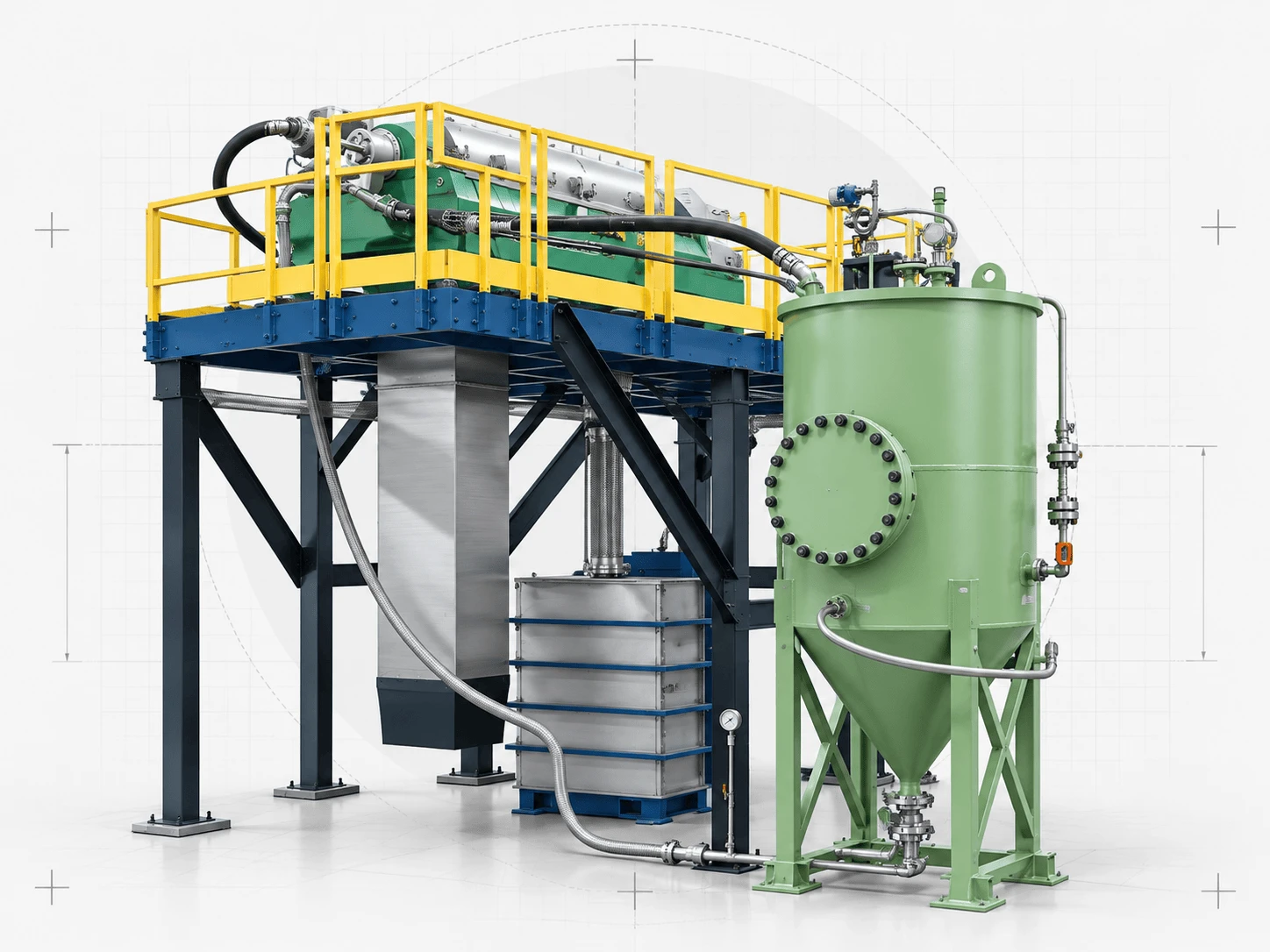
Alumina trihydrate captured from the reactor stream.
Impurities removed toward target specification.
Conversion toward alumina oxide.
Particle size and morphology engineered for customer qualification.
Where it comes from
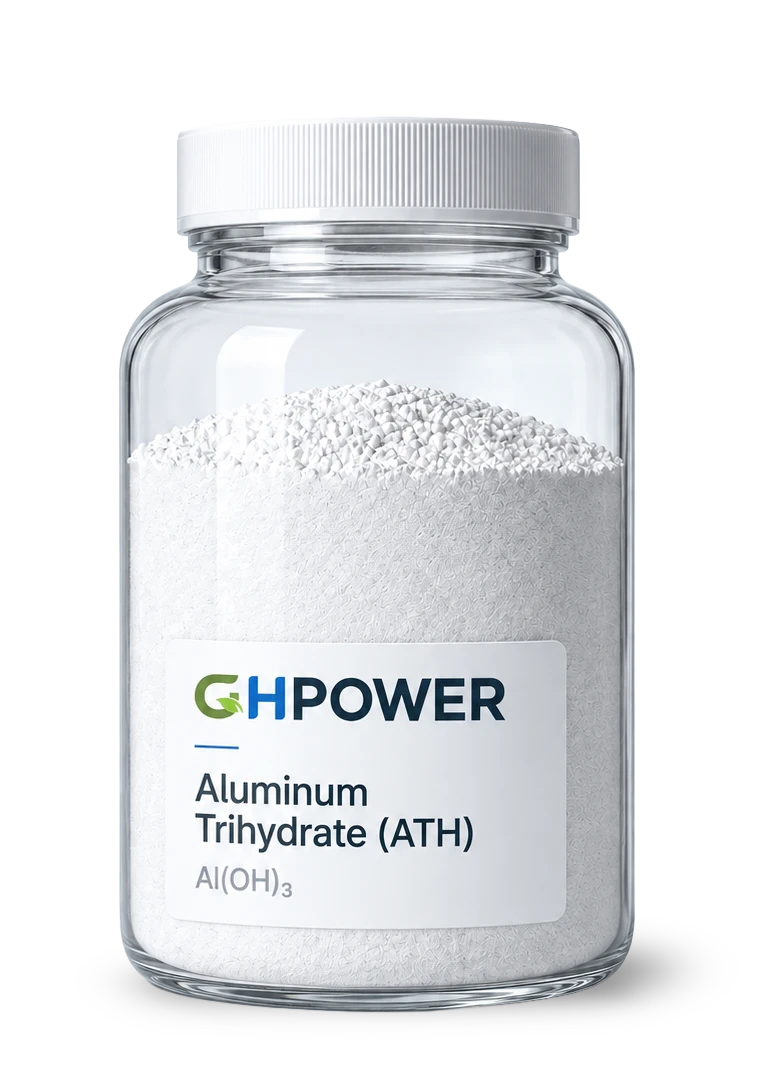
Alumina trihydrate is an output of the aluminum-water reaction, produced alongside heat and hydrogen energy. The quantity and finished grade require operating and assay validation.
Material value depends on purification, qualification, customer acceptance, market price, and the final commercial arrangement. No customer purchase or capital-repayment mechanism is assumed.
The purity ladder
The same material moves through three stages of processing. The polishing line determines which specification and market it can serve.
Final grades and purity specifications will be published following production and assay validation.
Water treatment and flame retardants. Alumina trihydrate is used as a flocculant in municipal and industrial water treatment, and as a non-halogenated flame retardant in plastics, cables, and building materials. High-volume, established, commodity-priced markets. This is where most aluminum-water processes stop.
Lithium-ion battery manufacturing. Alumina oxide is applied as a ceramic coating on battery separators, improving thermal stability and safety in cells. Demand is tied directly to EV and grid storage production. This is the fastest-growing segment of the market.
Advanced glass and electronics. High-purity alumina is a constituent of aluminosilicate glass used in consumer device cover glass, a dopant in optical fibre, and a feedstock for synthetic sapphire, LED substrates, and semiconductor processing materials. Purity requirements here are measured to four and five nines, and specification tolerance is what determines whether material qualifies at all.
North American supply
Global concentration
High-purity alumina supply is concentrated in Asia. Asia-Pacific accounted for roughly three-quarters of global HPA volume in 2025, with Japanese producers leading the highest-purity grades and Chinese producers dominating volume.
North American opportunity
North America consumes high-purity alumina in battery, semiconductor, and optics manufacturing, and produces almost none of it. GH Power produces alumina in Canada, from recycled North American feedstock, as a co-product of energy generation.
Sources: USGS via Fortune Business Insights; Mordor Intelligence; Persistence Market Research. Market figures shown for 2025.